
Commercial fitouts are fast-moving beasts. Multiple trades zip back and forth across the same space, materials are constantly being lugged in and out, and deadlines are always tight. In the midst of all this activity, finished floors can easily become one of the first areas to get battered.
Whether the project involves an office, retail shop, hospitality venue, medical centre, school, showroom, or commercial tenancy, floor protection needs to be on your radar before site works even start. Once timber, vinyl, tiles, polished concrete, carpet, or hybrid flooring gets damaged, the repair cost can be way higher than the cost of preventing the problem in the first place.
For builders, project managers, shopfitters, and contractors, proper floor protection is about so much more than just keeping the site tidy. It helps reduce defects, avoids handover delays, safeguards client relationships, and keeps your project looking pro throughout.
Why Floor Protection Matters in Commercial Fitouts
Commercial fitouts often kick off after flooring has been installed, or in spaces where existing floors need to be preserved. This creates a major headache. Trades might be installing partitions, electrical services, joinery, glazing, mechanical systems, painting, signage, or furniture while traipsing all over the finished surface every day.
The most common causes of floor damage during fitouts include:
- Heavy foot traffic from workers and subbies
- Ladders, trolleys, scaffolds, and mobile equipment
- Dragging materials, joinery, furniture, or tools across the floor
- Paint spills, plaster dust, adhesives, silicone, and sealants getting everywhere
- Dropped screws, nails, tools, timber, or metal components
- Moisture, mud, and debris getting tracked in from outside
- Poorly protected access paths and high-traffic zones
Even minor scratches or stains can turn into a serious issue at practical completion. Clients, landlords, tenants, and certifiers all expect the space to be handed over in a clean and defect-free state. Floor damage can lead to disputes, back charges, rework, and unnecessary stress right at the end of the job.
Start With a Floor Protection Plan
The best time to think about floor protection is before trades even start on site. A simple plan can make all the difference.
Builders need to think about:
- The type of flooring they’re protecting
- Which areas are going to get the most traffic
- Where materials will be delivered and stored
- Which access paths will be used by trades
- Whether mobile equipment or trolleys will be used
- How long the protection needs to stay in place
- Whether the floor needs to be protected from water or moisture
- Whether the project requires temporary protection for timber, carpet, vinyl, tile, or concrete surfaces
Different floors need different protection systems. A product that works well on tiles might not be good enough for timber. A waterproof product might be perfect for wet trades, but some timber floors might need a breathable solution depending on the coating, curing time, and what’s going on at the site.
Protect High-Traffic Access Routes First
In most commercial fitouts, the highest risk areas are the main walkways. These include entry points, lift lobbies, corridors, stair access, delivery routes, and paths between work zones.
These areas need to be protected early on and kept that way throughout the project. If the floor protection gets damaged, torn, or gets covered in debris, it needs to be sorted out ASAP.
For busy access routes, builders should consider using durable temporary floor protection that can handle regular foot traffic, tools, dust, and light equipment movement. Taped edges and overlaps can help reduce trip hazards and stop dust or debris from getting underneath the protection.
Protect Timber Floors Carefully
Timber flooring needs special attention during commercial fitouts. Solid timber, engineered timber, parquetry, and timber-look flooring can all be vulnerable to scratches, pressure marks, moisture, and staining.
When protecting timber floors, builders should steer clear of using tapes or adhesives directly on the finished surface unless the product is specifically designed and approved for that use. Some tapes can leave behind a residue, pull coatings off, or react with floor finishes, especially if left there for too long.
Key tips for protecting timber floors include:
- Checking that the timber coating has properly cured before covering it
- Using a breathable floor protection system where needed
- Avoiding trapping moisture under the protection
- Keeping sharp debris, screws, and grit away from the surface
- Not dragging heavy objects across the protected area
- Using additional protection under ladders, trestles, and equipment
- Checking the floor protection regularly during the project
Timber surfaces can be expensive to repair. In many cases, one deep scratch can require sanding and refinishing a much bigger area to get a consistent result.
Choose the Right Protection for the Right Floor
There’s no single floor protection product that suits every commercial fitout. The best option depends on the floor type, project duration, trade activity, and the level of risk.
Common floor protection options include:
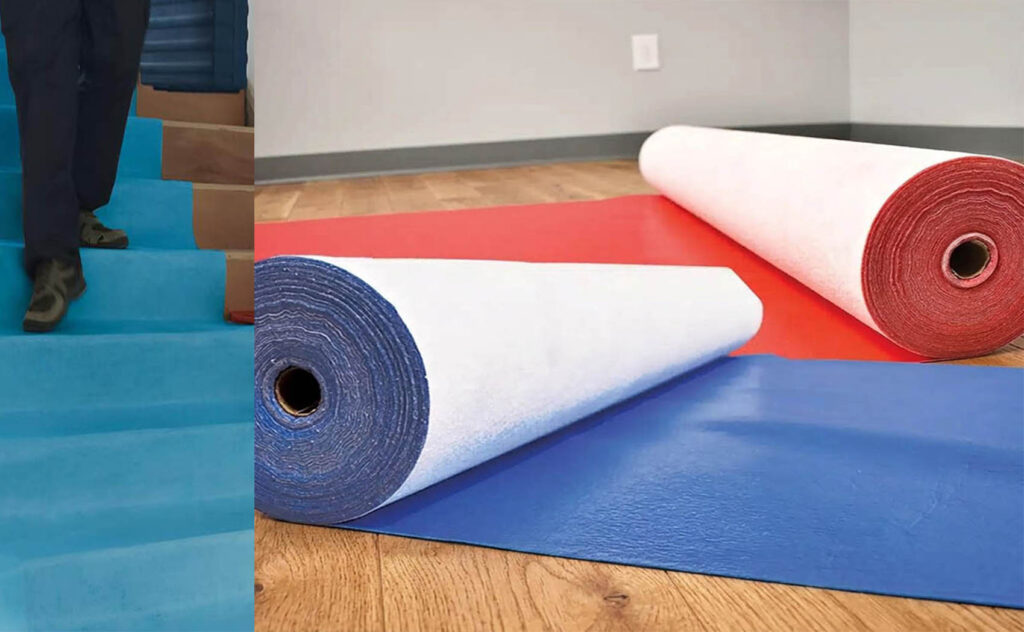
Temporary floor protection rolls
Suitable for covering large areas quickly. These are often used in commercial projects where wide coverage is required. Anti-Slip Floor Protection
Think of areas with foot traffic as a safety concern, that’s where this stuff comes in handy.
Impact Resistant Protection
For places where tools and equipment get dropped or moved around a lot you’ll need this sort of thing.
Water Resistant Protection
Helps out when you’re painting, plastering, cleaning or doing any of the wet trades, because let’s face it, water and floors don’t mix.
Breathable Protection
Timber floors, newly laid surfaces and coatings that need to breathe need this sort of protection.
Carpet Protection Film
For protecting carpets from dust, dirt and the odd spill when you’re doing internal works.
Heavy Duty Board Protection
When you need a bit more impact resistance, like delivery routes or areas with equipment moving all over the place.
Choosing the wrong floor protection can be a real pain. Non-Breathable products can trap moisture, Low quality protection can tear easily and some adhesive films just aren’t suitable for certain surfaces – Builders need to check product suitability before installation.
Keeping Dust and Debris Under Control
Dust and grit are the enemies of a nice floor, even when you’ve got protection down, small particles can get underneath if the edges arent secured properly or if the protection is lifted up and down too many times.
During a commercial refurb, cleaning up is essential. Regularly sweeping or vacuuming round the protected areas and access points will help reduce the risk of those scratchy particles getting onto the floor. And don’t even think about cutting materials directly on a finished surface, unless you’ve got a cutting board or work platform to hand.
A clean site is safer, more efficient and makes it easier to spot any issues before they become a right old headache.
Thinking About the Sequence of Works
Floor protection needs to be matched to the construction sequence – Some projects start with the floors, others finish with them. Builders need to coordinate with the flooring installers, painters, joiners and the rest to ensure everyone knows which areas are protected and what activities are allowed.
For example: Painters will need protection from paint splatter and roller marks, joiners will need impact protection when installing cabinetry, electricians will need safe access for ladders and toolboxes . You get the idea Good sequencing reduces double handling and helps avoid last minute rework.
Mistakes to Avoid with Floor Protection
Lots of floor protection failures come down to a few small oversights, the most common mistakes are:
- Installing protection too late
- Using the wrong product for the floor
- Leaving gaps in high traffic areas
- Using unsuitable tape on finished floors
- Allowing dust and screws underneath the protection
- Failing to replace torn or damaged protection
- Removing protection too early
- Dragging stuff across the protected floors without taking care
- Assuming one product is good for all surfaces – all classic mistakes
Commercial refurb’s are a stressful time for trades, without clear site rules, floor protection can quickly get damaged or ignored.
Making Sure All Trades Know the Rules
Floor protection works best when all the trades know what’s expected of them. Builders and site supervisors need to make floor protection part of the site induction or daily communication.
Simple rules can include: don’t remove the protection without approval, don’t cut materials on finished floors, don’t drag equipment across the floor, clean up spills immediately and so on.
This helps create a bit of accountability and reduces the chance of accidental damage.
Floor Protection and Handover
At handover, the state of the floors makes a big impression – even if the rest of the build is fine, a damaged or dirty floor can really let the client down.
Proper floor protection makes handover smoother by reducing defects, presentation and limiting the need for last minute repairs. It also protects the builder’s reputation – a clean, well-managed site shows attention to detail and care for the client’s property.
Choosing a supplier that knows their stuff is crucial for commercial projects Builders should work with a supplier that understands the different floor surfaces and site conditions. They should be able to recommend the right protection based on the floor type, project duration and level of protection you need.
Floor Protection Australia provides lots of different temporary floor protection solutions for builders, renovators, shopfitters and contractors working on a wide range of commercial and residential projects.
The right protection can make a big difference to the final result, reducing damage, preventing unnecessary rework and supporting a cleaner, safer and more professional site.
Protecting Floors – Don’t make it an afterthought
Finished floors are high-value surfaces, once they get damaged – which can be costly to put right and take up a lot of time. Builders can cut the risk of a major headache by getting their planning off to a good start, selecting the right protection measures for each type of floor, making sure access routes stay clear, having a clear chat with the in-trade crews about what’s expected of them, and regularly checking that the protection is still doing its job throughout the whole project.
A well protected floor makes all the difference in getting a commercial fit-out done on time and to a high standard right from the day the project kicks off, to the last day when the handover happens. For builders though, it’s really just about doing the basics right in order to deliver a top class result.
To get the low down on temporary floor protection options for commercial fit-outs, head on over to floorprotection.com.au.