
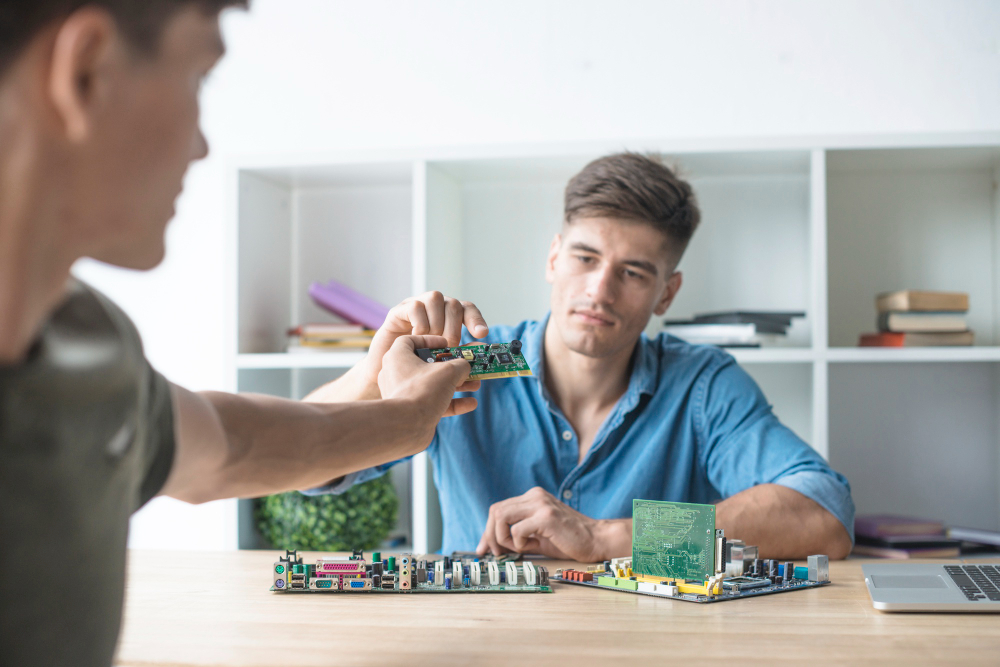
Many people build small robots at home. These robots move, see, and react to the world. To do this well, they need fast thinking. That “thinking” comes from processing data. A GPU can help with this. A GPU handles many tasks at once. This makes it great for vision, mapping, and simple learning tasks. When a robot uses a GPU, it feels quick and more alive.
How GPUs Make Robots Think Faster
A robot needs to see shapes, avoid walls, and read signs. These tasks use visual data. A GPU breaks big visual jobs into tiny parts. Then it solves them side by side. A small CPU may feel slow when doing this alone. But a GPU can finish the task in a short time. This helps a robot move with ease and less delay.
Simple Tasks That Improve With GPU Power
Home robots have small jobs. They can spot faces. They can read hand signs. They can follow a line on the floor. They can map a room. A GPU speeds up each of these steps. Even hobby robots move better with this lift. This is why many DIY fans add GPU boards to their builds.
Easy Ways To Start With a GPU Board
You can start small. A low-power GPU board is cheap today. Many kits include sensors and cables. They also come with sample code. You can plug them into a robot car frame. You can try object tracking or room scanning. These kits help you learn without stress.
Using GPUs for Smart Home Tasks
You can also use a GPU board for home tasks. It can run a smart camera that spots pets. It can check if a door is open. It can turn off lights when no one is near. It can watch for smoke. These smart tasks need fast data work. A GPU makes that smooth and quick.
A Fun Example: A Small Bot With Big Vision
Think of a small rolling bot. It has a tiny camera. It sees the world in real time. The GPU inside helps it find edges and color spots. It can follow a person. It can carry small things. It can avoid pets. All this feels easy with a GPU. Without one, the bot may lag when the room gets busy.
Why Many New Makers Try GPU Projects
New makers like GPU robots because they get good results fast. They do not need deep math skills. They can learn step by step. Online guides show how to use image blocks, motion blocks, and voice blocks. Simple drag-and-drop tools also help. The path to a working robot feels short and fun.
Many hobby users learn faster when they follow online labs and test real-world cases. These guides often show how to use streaming video, quick scans, and live alerts. While reading these guides, some may also explore fun topics like bestaustraliancasinosites online pokies australia, but the real goal stays the same: to build skill and learn how fast GPU tools can react to the world.
How GPUs Help With Safety Features
Robots need to stay safe. A GPU helps with this too. It can check for sharp objects. It can see if a hand is too close to a blade. It can tell if smoke fills the room. It can spot a fallen person. These tasks use many images per second. A GPU handles this load with ease. This lowers risk and builds trust.
Using GPUs for Light AI
A GPU can run simple AI models. These models help the robot learn small rules. For example, it can learn that a book is not a cup. It can learn that shoes belong on a shelf. It can learn a person’s voice. These tasks do not need a huge AI model. A tiny model on a GPU works fine. This makes the robot feel smart.
Power Use and Heat
Some people fear GPU heat. Small GPU boards use far less power than large desktop cards. They still get warm, but small cooling fans fix that. You can place vents in the robot shell. You can add pads to spread heat. These steps keep the board safe and steady.
Picking the Right GPU Board
A good board should be light. It should use low power. It should work with common code tools. It should have many ports for cameras and sensors. Some boards let you stack parts on top. This helps you build tall bots with more room for tools.
Tips for New DIY Makers
Start with a basic frame. Add wheels. Add a small camera. Add a board with a GPU. Test one skill at a time. Let the bot see edges first. Then try object tags. Then try voice control. Each skill adds joy. Each step builds your confidence.
Looking Ahead: Smarter DIY Bots
GPU boards will get even smaller in the future. They will need less power. They will cost less. This means more people will build home bots. These bots may clean simple spills. They may sort mail. They may watch pets. They may greet guests. As GPU power grows, the barrier to entry falls.
Final Thoughts
GPU power lets small robots do big tasks. It keeps code light and fast. It helps hobby makers learn and grow. It builds smart homes that respond in real time. Anyone can start today. All you need is curiosity, a small kit, and time to explore. When you use a GPU in your DIY robot, you unlock a new layer of speed, skill, and fun.